
Router & Table Outfitting · 6 min read
Top bearing vs. bottom bearing flush trim bits: which one to use
Where the bearing sits decides where the template goes. Learn when to use a top bearing pattern bit, a bottom bearing flush trim bit or a set with both.
By SQUAREFORGE Shop Desk · Updated
Key takeaways
- A top bearing bit follows a template placed on top of the workpiece.
- A bottom bearing bit follows a template or edge below the workpiece.
- Owning both lets you rout with the grain and avoid tear-out by flipping the setup.
The one difference that matters
Both bits cut flush to whatever the bearing rides on. A top bearing bit, often called a pattern bit, rides a template above the work. A bottom bearing bit rides a template or a finished edge below the work. On a router table the template sits on top for a top bearing bit; with a handheld router the reverse is often true.
| Bearing | Template position | Typical job |
|---|---|---|
| Top | On top of the workpiece | Copying parts from a pattern on the router table |
| Bottom | Under the workpiece | Trimming laminate, veneer or a glued-on edge flush |
| Both (double bearing) | Either side | Switching direction to stop tear-out |
Flush trim bits
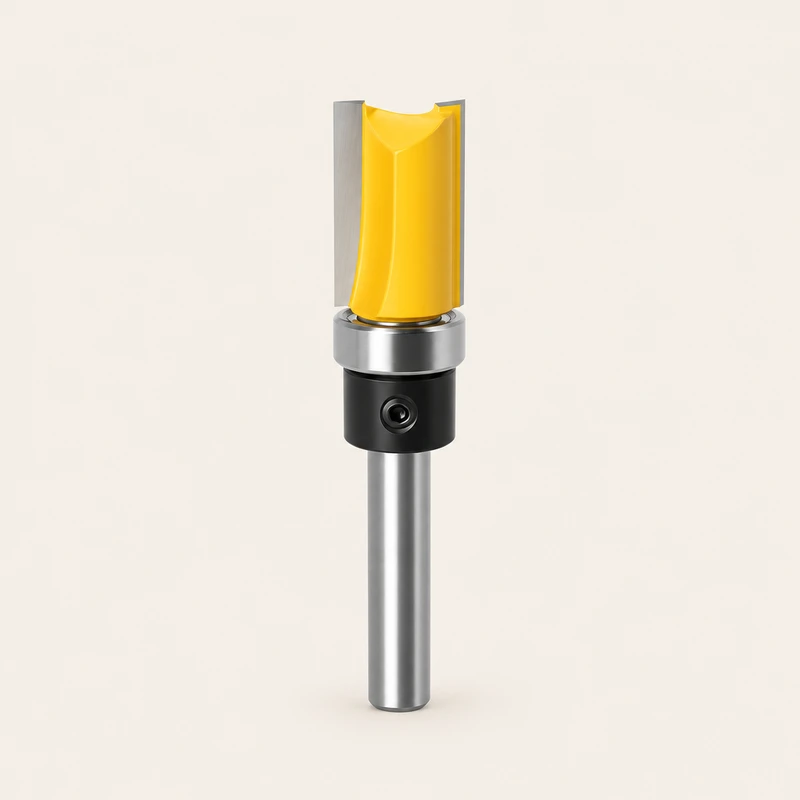
6mm Shank, 25mm Cut
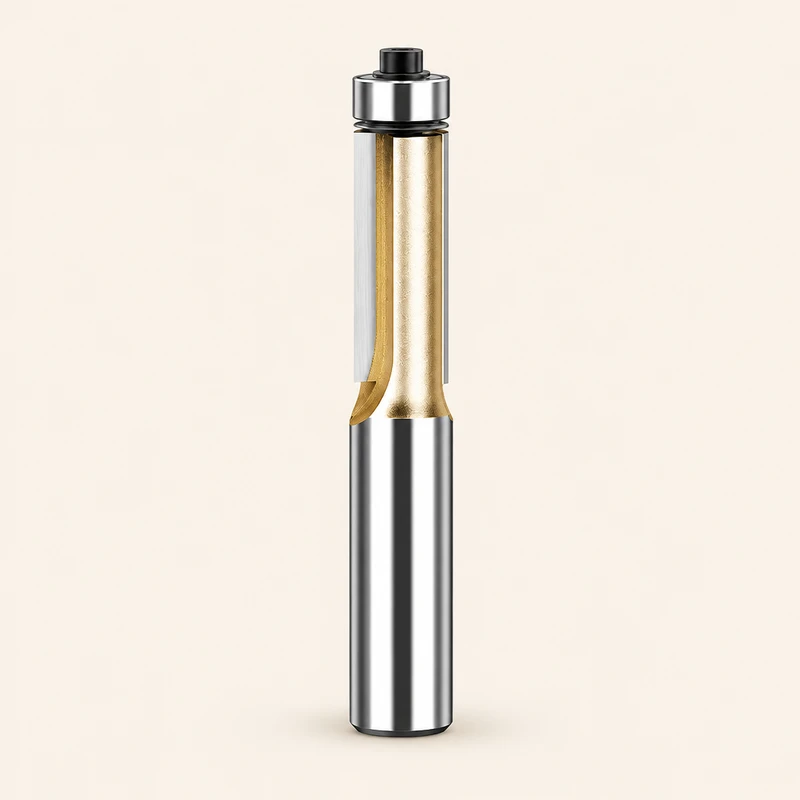
Single 2983 bit
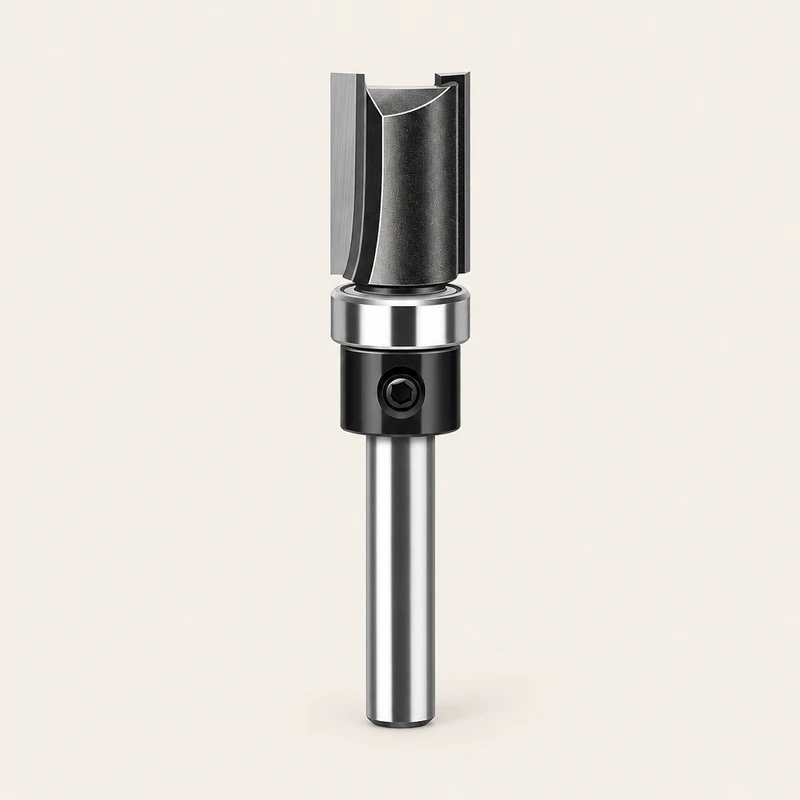
6mm Shank, 38mm Cut Length
Beat tear-out with direction
On curved parts the grain changes direction around the shape. When you are cutting downhill into the grain, the edge can split. Flip the workpiece and switch to the other bearing type so the bit cuts with the grain. That is why many shops keep both.
- Rough cut firstSaw within about 1/16 in. of the line so the bit takes a light pass.
- Fix the templateUse double-sided tape or toggle clamps so the pattern cannot shift.
- Feed against rotationOn a router table, feed right to left across the bit.
Router table setup checklist
| Frequency | Tasks |
|---|---|
| Before each session | Check insert plate flushness, confirm bit height on scrap |
| Between bits | Rezero height gauge, check collet for debris |
| Monthly | Clean and wax the table surface, inspect featherboard fingers |
/ Frequently asked
Can I use a flush trim bit with a guide bushing?+
You can, but bearing-guided bits are simpler for flush work because the bearing matches the cutter diameter.
Which shank size should I choose?+
Use 1/2 in. shanks when your router accepts them for larger cuts; 1/4 in. suits trim routers.