
Clamping · 7 min read
Horizontal toggle clamps: how to choose, size and mount them on jigs
Horizontal toggle clamps lock work down with one flip of the handle. Learn how they differ from vertical and push-pull clamps, how to size holding force and how to mount them on a jig.
By SQUAREFORGE Shop Desk · Updated
Key takeaways
- A horizontal toggle clamp has a low handle that lies flat when locked, so it stays clear of the router or saw.
- Choose a clamp with more holding force than you think you need; the spindle should press at the work, not at full reach.
- Mount clamps on a flat, rigid base with screws or bolts, and adjust the rubber spindle so it locks with light hand pressure.
What a horizontal toggle clamp does
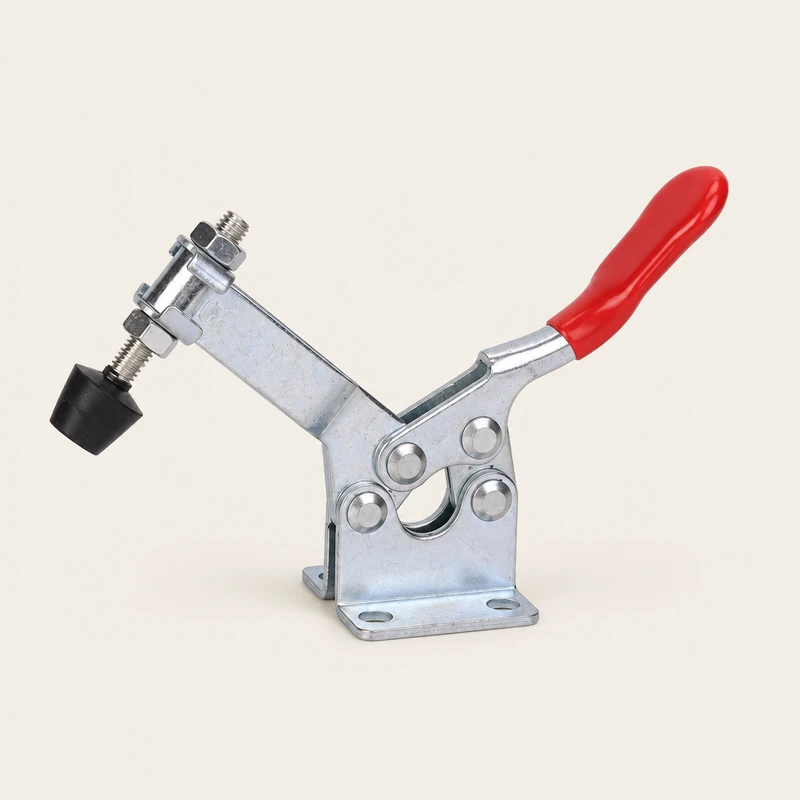
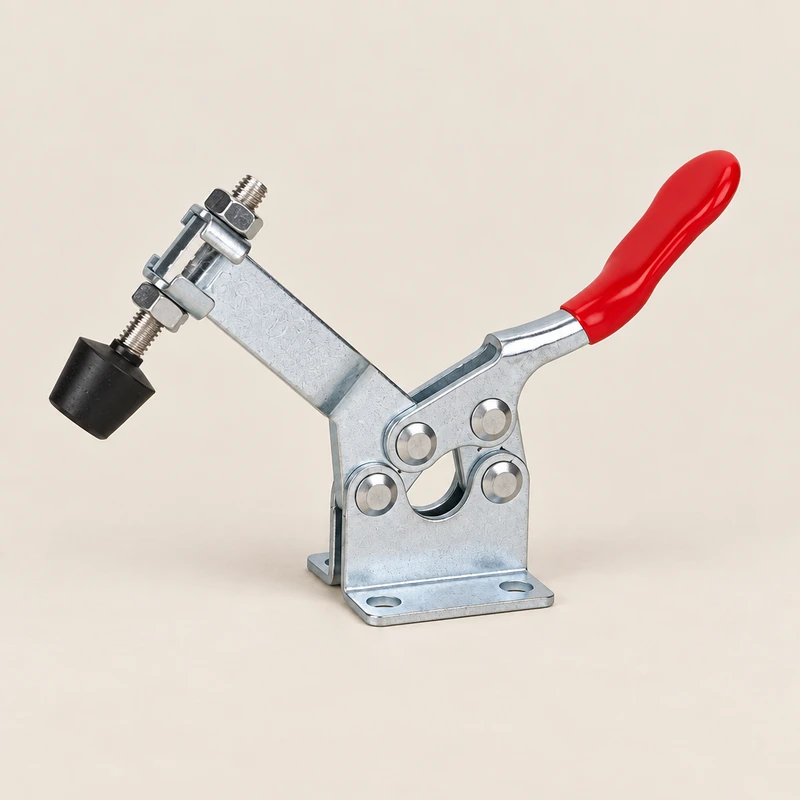
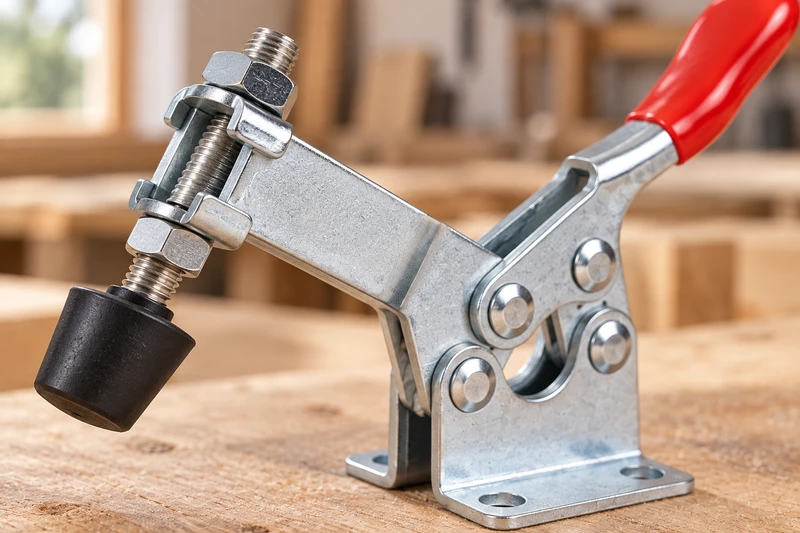
A toggle clamp uses a linkage that goes slightly past center when you push the handle down. Once it passes that point it stays locked until you pull it back, so it holds steady through vibration. On a horizontal clamp the handle lies flat in the locked position, which keeps it low and out of the path of a router base, sled fence or saw blade.
Horizontal, vertical, push-pull or plunger
| Type | Handle when locked | Best for |
|---|---|---|
| Horizontal | Lies flat | Low-profile jigs, router templates, crosscut sleds |
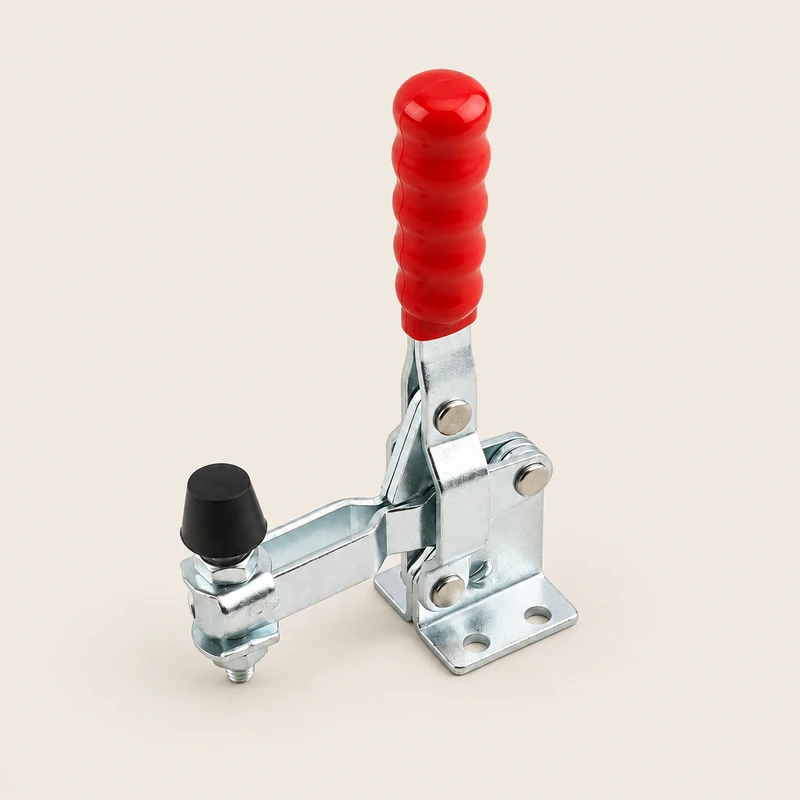
| Vertical | Stands upright | Fast loading on drill press and assembly jigs with open space above |
| Push-pull | In line with the plunger | Pushing a part against a stop or fence |
| Plunger | In line with the plunger | Straight-line pressure in tight spaces |
Toggle clamps in the store
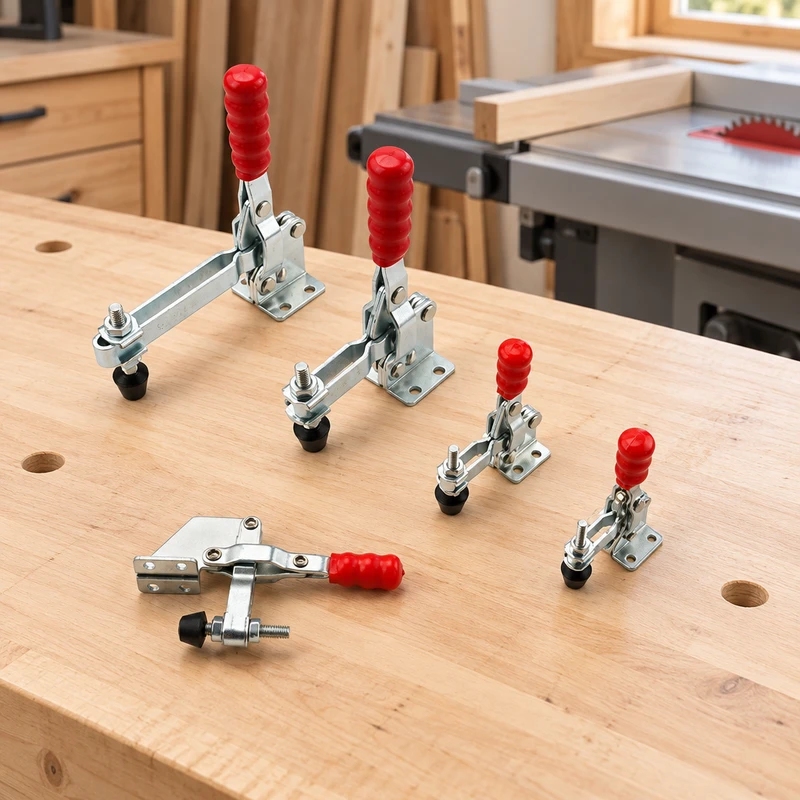
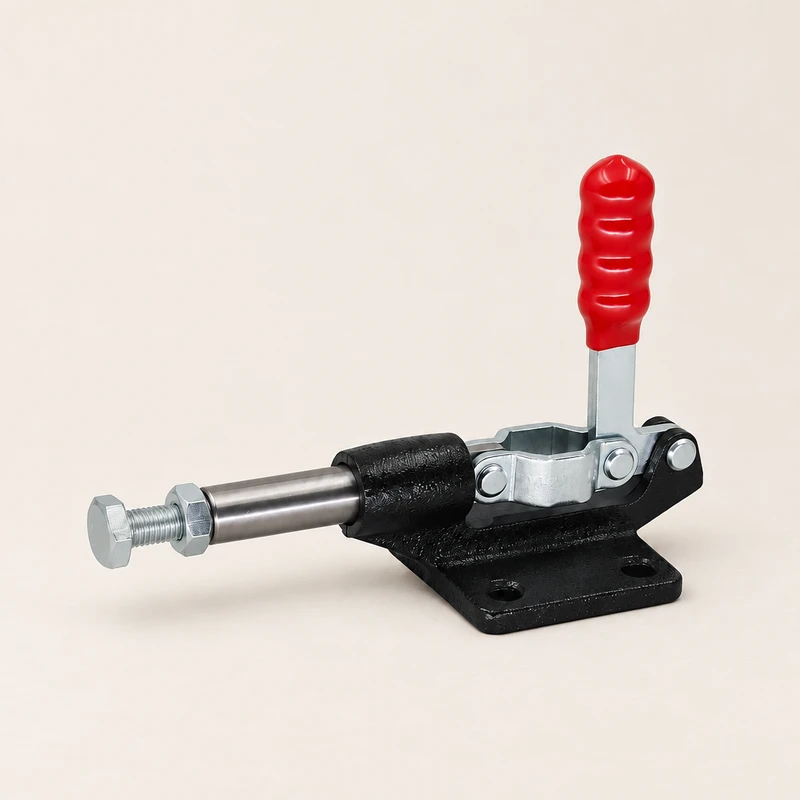
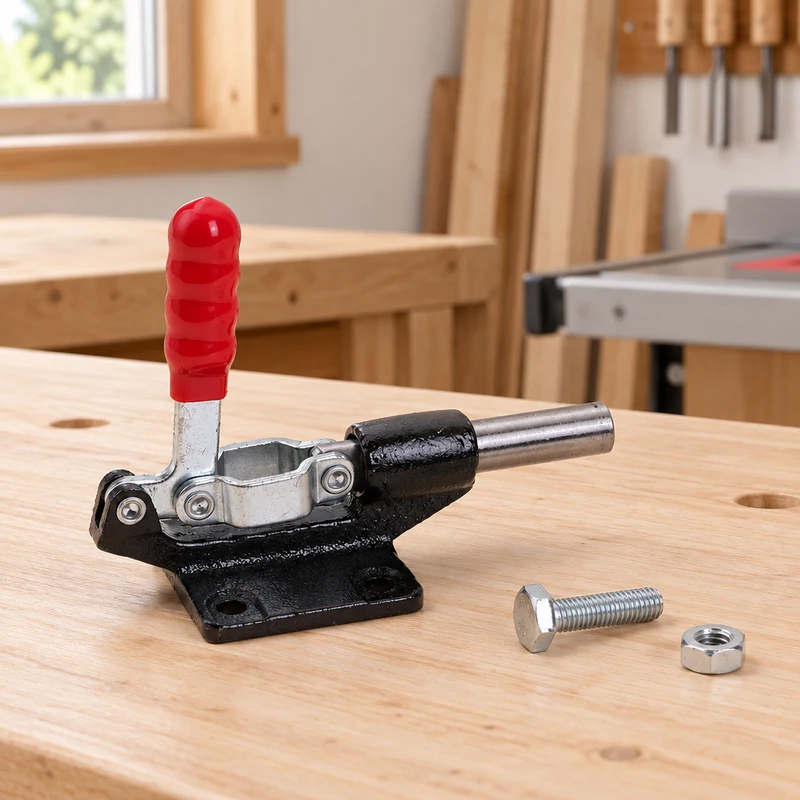
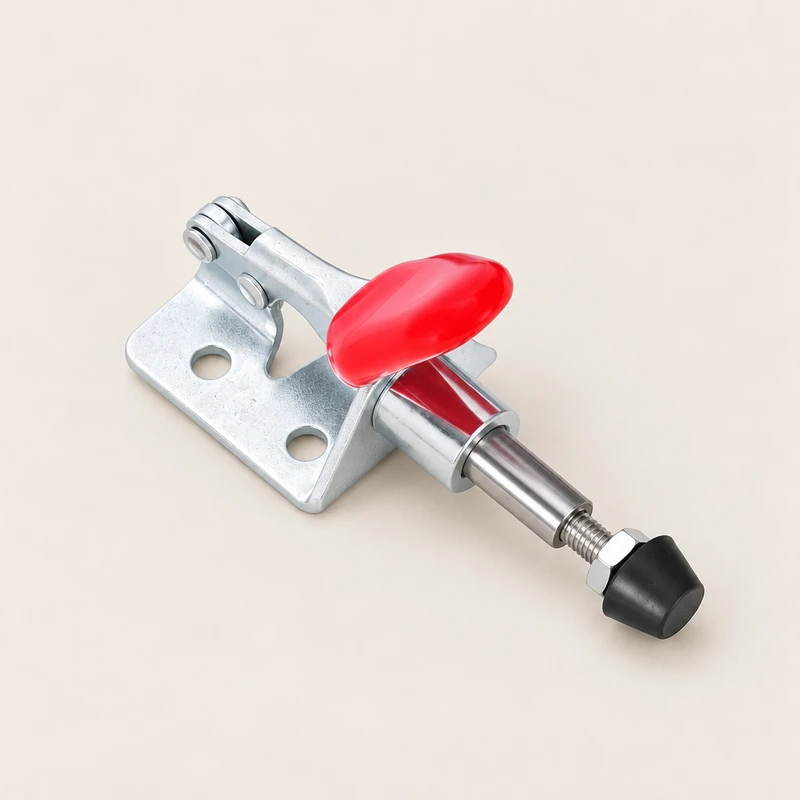
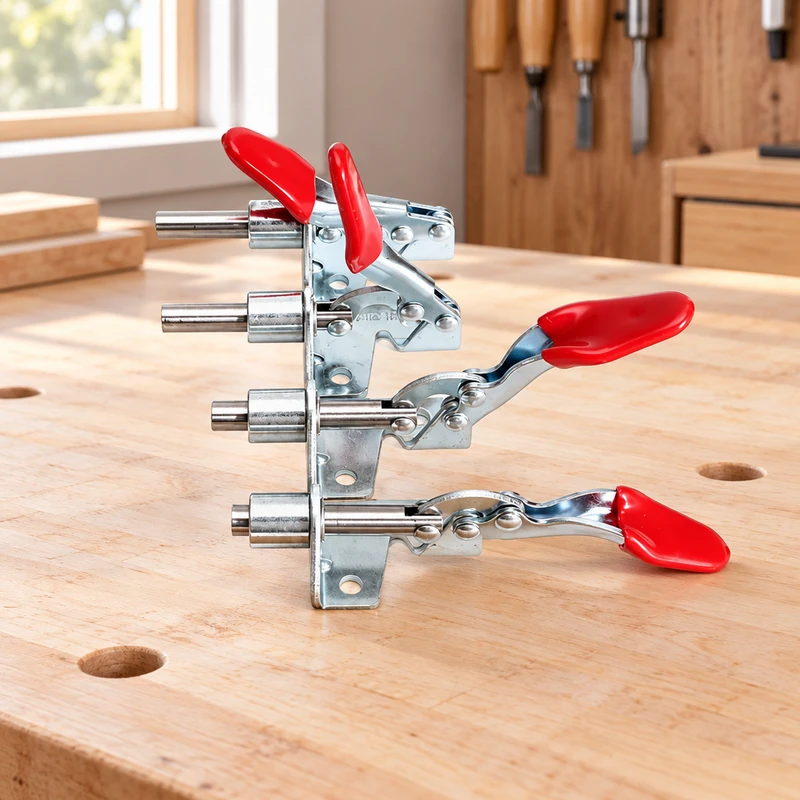
How to choose the right clamp
- Reach: measure from the mounting holes to where the spindle needs to press. Pick a bar with a little extra length so you can fine tune.
- Spindle height: the threaded spindle sets how thick a part the clamp can hold. Check the range against your thickest and thinnest stock.
- Base style: flanged bases screw down flat on a jig; straight bases mount to an edge or fence.
- Holding force: listed ratings are measured close to the pivot. Pressure drops as the spindle moves farther out on the bar.
Mounting a toggle clamp on a jig
- Build a rigid baseUse 3/4 in. plywood or MDF. A thin base flexes and lets the part shift.
- Position with the part in placeSet the workpiece in the jig, then place the clamp so the spindle lands near the middle of the part, not on its edge.
- Fasten securelyUse pan-head screws for light jigs, or bolts with T-nuts for jigs that see heavy use.
- Set the spindleThread the spindle down until the clamp locks with firm hand pressure. Too tight strains the linkage and can dent soft wood.
Workholding checklist
| Frequency | Tasks |
|---|---|
| Before glue-up | Dry-fit clamps and confirm reach and pressure points |
| During assembly | Check squareness under clamp pressure, not just before |
| Periodically | Inspect clamp pads and dog holes for wear |
/ Frequently asked
What is the difference between horizontal and vertical toggle clamps?+
Both lock the same way. A horizontal clamp's handle lies flat when locked, which keeps it low for router and saw jigs. A vertical clamp's handle stands up, which is easier to reach on drill press and assembly jigs.
Can I adjust the clamping pressure?+
Yes. Thread the rubber spindle up or down. Lower it to press harder, raise it for lighter pressure or thicker parts.